CSSHL divisions explained
U15, U17, and U18 Prep, the Female Prep stream, and how the conferences fit together — in plain language, without the jargon. Then how to actually read where your player stands.
At a glance
The four CSSHL streams
Academy divisions grouped by age, then split across Western and Eastern conferences. Here's the plain-language version — always confirm the current list on csshl.ca.
U15 Prep
The entry pointUnder-15 · bantam age
The common on-ramp to academy hockey — a development-first year where bantam-age players find their level against other prep programs.
U15 Prep guideU17 Prep
The bridgeUnder-17 · midget age
Where development and recruitment start to overlap. The gap between the two closes fast, and scouts begin paying closer attention.
U18 Prep
The showcaseUnder-18 · recruiting age
The recruiting years. Junior, NCAA, and U Sports scouts are most active here — and a clear, measurable development arc matters most.
Female Prep
Full-season pathwayGirls · U15 / U17 / U18
The same academy-based, full-season development pathway for girls, run across its own divisions and conferences.
The CSSHL is organized by age into a small set of academy divisions, then split across Western and Eastern conferences. Below is the fuller version of each — for the current, official list of divisions and member academies, the league's own site is the source of truth: csshl.ca.
U15 Prep
The under-15 division — the common entry point into academy hockey. A development-first year for bantam-age players getting their first taste of a full academy season. We cover it in detail in the CSSHL U15 Prep guide.
U17 Prep
The under-17 division — a bridge year where the gap between development and recruitment starts to close, and where scouts begin paying closer attention. Points still matter, but how a player is trending starts to matter more.
U18 Prep
The under-18 division — the showcase years. This is where junior, NCAA, and U Sports recruiting is most active, and where a clear, measurable development arc matters most. It's also the level where the CSSHL recruitment pathway really opens up.
Female Prep
The CSSHL also runs a Female Prep stream, giving girls the same academy-based, full-season development pathway. Divisions and conferences for the female side are listed on the official site.
Conferences
Divisions are split into Western and Eastern conferences to keep travel manageable across a large country. Conference play feeds into the league's championship structure at season's end. For the live schedule and standings, see the CSSHL schedule guide.
What the standings hide
How to read your player's division
Whatever the division, the same truth holds: the standings show who scored, not who developed.
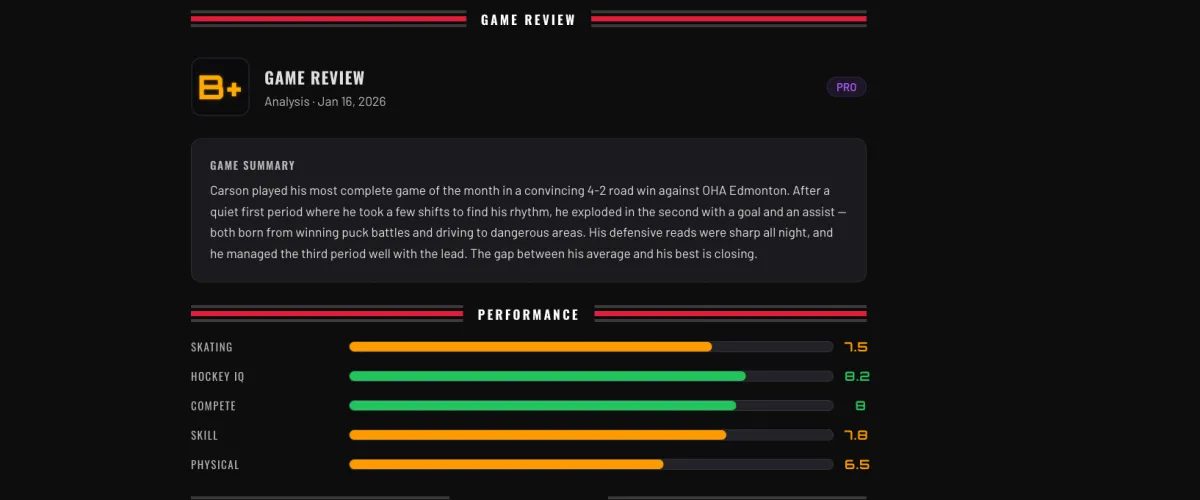
A U15 defenseman can post modest points while quietly becoming a far better skater and decision-maker — and you'd never see it on a standings page. Shift Excellence turns your player's real games into an OVR rating ranked against their own division, plus a coach-style Game Report on every game — so “how is my player doing in U17 Prep?” gets a real answer instead of a guess. (For context, our real U18 Prep benchmark sits at a median OVR of 53, with the top 10% at 59 and up.)
Go deeper
More CSSHL parent guides
CSSHL Overview
What the CSSHL is, how the season works, and how to read development.
CSSHL U15 Prep
The most common entry point — what U15 Prep is and what to expect.
CSSHL Recruitment
How players advance to junior, NCAA, and U Sports out of the CSSHL.
CSSHL Schedule
Where to find the official schedule, standings, and stats.
Frequently Asked Questions
Why trust the number
Built by hockey people. Backed by real data.
Pro-level evaluation
Designed with coaches who've worked in pro and elite youth hockey — your player is graded the way scouts actually evaluate talent, not by a self-rating.
Real games, not opinions
Real game data tracked for 12,716 players across 7 leagues and 478 teams. Every rating comes from real game data, measured against your player's own division.
The number is earned
Nobody scores themselves. The OVR comes off the ice and it moves as the work goes in — so progress is something you can see, not argue about.
“Every parent asks the same thing — is my child actually developing? For the first time there's a real answer on the ice, not a hunch. This is how pro organizations evaluate players, built for youth hockey.”
See where your player stands in their division
Import their games and get an OVR ranked against their own division, plus a coach-style report on every game.